
Advanced Packaging Hits a Wall
Advanced packaging faces new limits as warpage, glass brittleness, and hybrid bonding stress redefine system performance and process control.

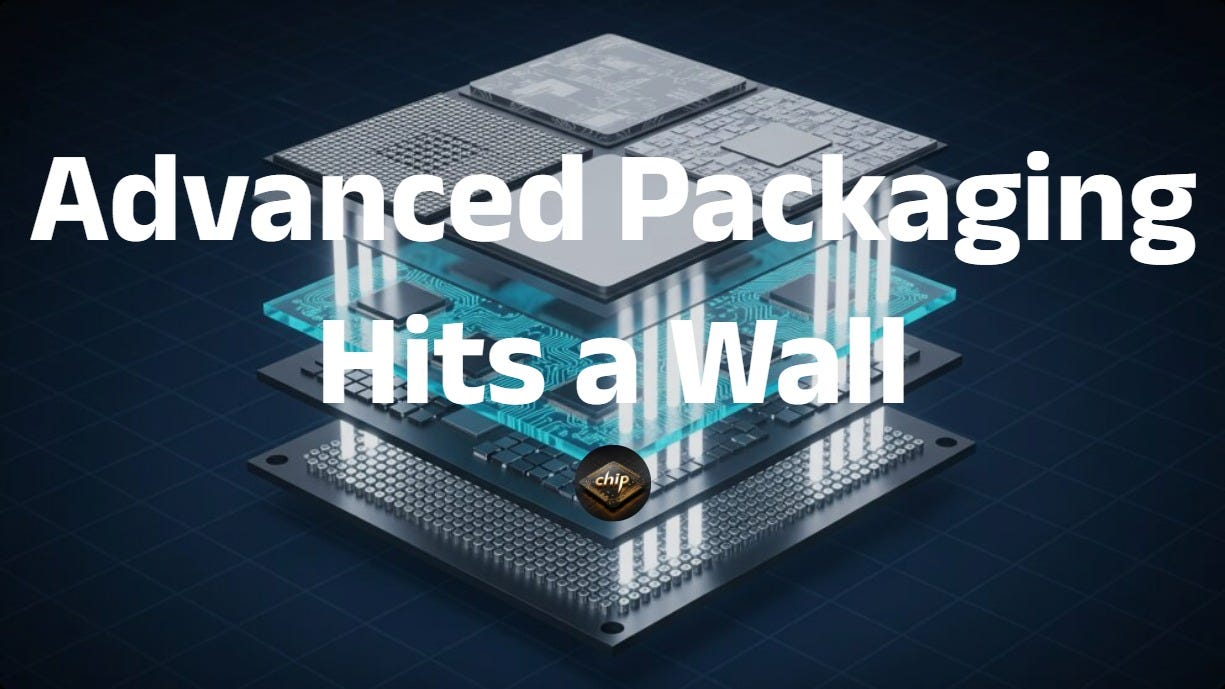
Over the past few years, Moore’s Law has shifted toward advanced packaging technologies, but the limitations of this approach are only now beginning to become apparent.
The design scale of artificial intelligence and high-performance computing is growing ever larger and more structurally complex, making packaging mechanics and process control no longer just a bottleneck for measuring interconnect density, but the next major challenge. As structures become thinner, larger, and more heterogeneous, issues such as warpage, glass brittleness, hybrid bonding yield, temporary bonding misalignment, and substrate limitations are becoming increasingly difficult to control.
These issues were recurring themes at this year’s iMAPS conference and were mentioned multiple times in recent interviews, all pointing to the same conclusion—the packaging industry is entering a phase where mechanical and process control problems are complicating continued scaling.
This is critically important because packaging now plays an increasingly dominant role in system performance. The old view that treats advanced AI system architectures as having packaging merely as a passive shell wrapping around the truly innovative core is no longer viable. Factors such as power delivery, thermal dissipation, interconnect density, substrate characteristics, and process flows all influence how systems are built and how they can be produced economically and efficiently.
